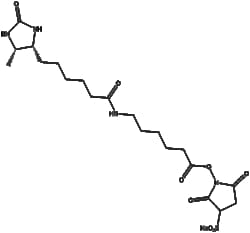
Protein Labeling Reagents
- (108)
- (3)
- (2)
- (17)
- (2)
- (2)
- (1)
- (7)
- (1)
- (38)
- (2)
- (1)
- (17)
- (7)
- (4)
- (15)
- (16)
- (8)
- (2)
- (1)
- (10)
- (5)
- (17)
- (1)
- (2)
- (16)
- (6)
- (6)
- (5)
- (15)
- (88)
- (17)
- (8)
- (66)
- (2)
- (2)
- (38)
- (1)
- (4)
- (18)
- (3)
- (17)
- (5)
- (6)
- (1)
- (22)
- (2)
- (2)
- (2)
- (6)
- (6)
- (11)
- (27)
- (2)
- (2)
- (1)
- (11)
- (1)
- (4)
- (30)
- (1)
- (1)
- (2)
- (8)
- (6)
- (5)
- (5)
- (5)
- (5)
- (1)
- (6)
- (47)
- (2)
- (3)
- (3)
- (5)
- (5)
- (41)
- (44)
- (35)
Filtered Search Results
Biotium CYANINE 647 SUCCINIMIDYL ESTER
CYANINE 647 SUCCINIMIDYL ESTER
Non-distribution item offered as a customer accommodation; additional freight charges may apply.
Learn More
Biotium CD5(CD5/54/F6), CF640R conjugate, 0.1mg/mL
Recognizes a 67 kDa transmembrane protein, which is identified as CD5. The CD5 antigen is found on 95% of thymocytes and 72% of peripheral blood lymphocytes. In lymph nodes, the main reactivity is observed in T cell areas. Anti-CD5 is a pan T-cell marker that also reacts with a range of neoplastic B-cells, e.g. chronic lymphocytic leukemia/small lymphocytic lymphoma (CLL/SLL), mantle cell lymphoma, and a subset (~10%) of diffuse large B-cell lymphoma. CD5 aberrant expression is useful in making a diagnosis of mature T-cell neoplasms. Anti-CD5 detection is diagnostic in CLL/SLL within a panel of other B-cell markers, especially one that includes anti-CD23. Anti-CD5 is also very useful in differentiating among mature small lymphoid cell malignancies. In addition, anti-CD5 can be used in distinguishing thymic carcinoma ( ) from thymoma (-). Anti-CD5 does not react with granulocytes or monocytes.Primary antibodies are available purified, or with a selection of fluorescent CF Dye
Non-distribution item offered as a customer accommodation; additional freight charges may apply.
Learn More
Biotium CF568 TETRAZINE 1MG
CF568 TETRAZINE 1MG
Non-distribution item offered as a customer accommodation; additional freight charges may apply.
Learn More
Biotium MITOVIEW 720 50 UG
MITOVIEW 720 50 UG
Non-distribution item offered as a customer accommodation; additional freight charges may apply.
Learn More
Biotium Insulin(E2-E3), CF488A conjugate, 0.1mg/mL
Recognizes a polypeptide which is identified as insulin, a 51-amino acid polypeptide composed of A and B chains connected through the C-peptide. Proinsulin, which has very little biological activity, is cleaved by proteases within its cell of origin into the insulin molecule and the C-terminal basic residue. Insulin enhances membrane transport of glucose, amino acids, and certain ions. It also promotes glycogen storage, formation of triglycerides, and synthesis of proteins and nucleic acids. Deficiency of insulin results in diabetes mellitus. The main storage site for insulin is the pancreatic islets. Antibodies to insulin are important as beta-cell and insulinoma marker.Primary antibodies are available purified, or with a selection of fluorescent CF Dyes and other labels. CF Dyes offer exceptional brightness and photostability. Note: Conjugates of blue fluorescent dyes like CF405S and CF405M are not recommended for detecting low abundance targets, because blue dyes have
Non-distribution item offered as a customer accommodation; additional freight charges may apply.
Learn More
Biotium Biotin(Hyb8), CF488A conjugate, 0.1mg/mL
This antibody recognizes both the free and protein-conjugated (either soluble or cell bound) form of biotin. This MAb is highly specific to biotin and shows no cross-reaction with other structurally related compounds. It has a very high affinity for biotin and is excellent for use in various amplification techniques. In some applications, localization of biotinylated probes with avidin produces unacceptably high background staining. Anti-biotin antibody may be substituted to decrease this noise.Primary antibodies are available purified, or with a selection of fluorescent CF Dyes and other labels. CF Dyes offer exceptional brightness and photostability. Note: Conjugates of blue fluorescent dyes like CF405S and CF405M are not recommended for detecting low abundance targets, because blue dyes have lower fluorescence and can give higher non-specific background than other dye colors.
Non-distribution item offered as a customer accommodation; additional freight charges may apply.
Learn More
Biotium CD45RO(UCHL-1), CF568 conjugate, 0.1mg/mL
Recognizes a 180-185 kDa protein, identified as isoform of leukocyte common antigen (CD45RO) (4th Leucocyte Typing Workshop: Code No. N31). The epitope recognized by this antibody is sensitive to neuraminidase digestion. This antibody reacts with mature activated T-cells, most thymocytes, and a sub-population of resting T-cells within both CD4 and CD8 subsets. It shows no reactivity with normal B or natural killer cells, but reacts with granulocytes and monocytes. Reportedly, it is useful to identify T-cell lymphomas and leukemias. It rarely stains NK cells or B-cell lymphomas.Primary antibodies are available purified, or with a selection of fluorescent CF Dyes and other labels. CF Dyes offer exceptional brightness and photostability. Note: Conjugates of blue fluorescent dyes like CF405S and CF405M are not recommended for detecting low abundance targets, because blue dyes have lower fluorescence and can give higher non-specific background than other dye colors.
Non-distribution item offered as a customer accommodation; additional freight charges may apply.
Learn More
Biotium Insulin(E2-E3), CF568 conjugate, 0.1mg/mL
Recognizes a polypeptide which is identified as insulin, a 51-amino acid polypeptide composed of A and B chains connected through the C-peptide. Proinsulin, which has very little biological activity, is cleaved by proteases within its cell of origin into the insulin molecule and the C-terminal basic residue. Insulin enhances membrane transport of glucose, amino acids, and certain ions. It also promotes glycogen storage, formation of triglycerides, and synthesis of proteins and nucleic acids. Deficiency of insulin results in diabetes mellitus. The main storage site for insulin is the pancreatic islets. Antibodies to insulin are important as beta-cell and insulinoma marker.Primary antibodies are available purified, or with a selection of fluorescent CF Dyes and other labels. CF Dyes offer exceptional brightness and photostability. Note: Conjugates of blue fluorescent dyes like CF405S and CF405M are not recommended for detecting low abundance targets, because blue dyes have
Non-distribution item offered as a customer accommodation; additional freight charges may apply.
Learn More
Biotium CD22(FR10B4), CF568 conjugate, 0.1mg/mL
Recognizes a protein of 130-140 kDa, identified as CD22 (also known as BL-CAM). CD22 expression is restricted to normal and neoplastic B cells and is absent from other haemopoietic cell types. In B-cell ontogeny, CD22 is first expressed in the cytoplasm of pro-B and pre-B cells, and on the surface as B cells mature to become IgD . It is not expressed by plasma cells, CD22 is found highly expressed in follicular mantle and marginal zone B-cells, and while germinal center B-cells are relatively weak. CD22 is a member of the immunoglobulin superfamily and serves as an adhesion receptor for sialic acid-bearing ligands expressed on erythrocytes and all leukocyte classes. It also associates with tyrosine kinases and play a role in signal transduction and B-cell activation.Primary antibodies are available purified, or with a selection of fluorescent CF Dyes and other labels. CF Dyes offer exceptional brightness and photostability. Note: Conjugates of blue fluorescent dyes like CF
Non-distribution item offered as a customer accommodation; additional freight charges may apply.
Learn More
LUMIPROBE AF 594 NHS ESTER 5-ISOMER 5MG
NC2213496 AF 594 NHS ESTER 5-ISOMER 5MG
Non-distribution item offered as a customer accommodation; additional freight charges may apply.
Learn More
Biotium CMV-p65(CMV101), CF488A conjugate, 0.1mg/mL
Ten to forty percent of the patients with acquired immunodeficiency syndrome (AIDS) develop cytomegalovirus (CMV) infections. In some patients with AIDS, CMV is detected in the bronchoalveolar lavage fluid (BALF), urine, and other specimens, even when there are no symptoms of CMV disease. An indicator of active CMV infection is needed to facilitate the diagnosis of CMV disease in patients with AIDS or HIV infection. CMV p65 antigen was detected in the leukocytes of both the peripheral blood and BALF during the early phase of CMV disease.Primary antibodies are available purified, or with a selection of fluorescent CF Dyes and other labels. CF Dyes offer exceptional brightness and photostability. Note: Conjugates of blue fluorescent dyes like CF405S and CF405M are not recommended for detecting low abundance targets, because blue dyes have lower fluorescence and can give higher non-specific background than other dye colors.
Non-distribution item offered as a customer accommodation; additional freight charges may apply.
Learn More
Biotium CD20(B9E9), CF488A conjugate, 0.1mg/mL
Recognizes a protein of 33-37 kDa, identified as CD20 (Workshop V; Code CD20.12). B9E9 recognizes extracellular domain of CD20. The epitope is similar to or identical to that recognized by other CD20 antibodies including Leu-16 and B1. This MAb can be used for immunophenotyping of leukemia and malignant cells, B lymphocyte detection in peripheral blood, B cell localization in tissues and B lymphocyte purification by immunosorbent methods. CD20 is a non-Ig differentiation antigen of B-cells and its expression is restricted to normal and neoplastic B-cells, being absent from all other leukocytes and tissues. CD20 is expressed by pre B-cells and persists during all stages of B-cell maturation but is lost upon terminal differentiation into plasma cells. Protein passes through the membrane 4 times with both ends in cytoplasm and exposes one short and one longer loop to the external environment. CD20 is not glycosylated in resting B cells and its cytoplasmic domains are differentia
Non-distribution item offered as a customer accommodation; additional freight charges may apply.
Learn More
Biotium CD37(IPO-24), CF488A conjugate, 0.1mg/mL
Recognizes a protein of 33-55 kDa, identified as CD37 (Workshop V; Code CD37.7). CD37 is strongly expressed on normal and neoplastic mature (sIg ) B-lymphocytes. In B-cell ontogeny, CD37 appears after the pre-B-cell stage, is maintained during peripheral B-cell development and is lost upon terminal differentiation into plasma cells.1 CD37 is also present, at low densities, on resting and activated T cells, neutrophils, monocytes, and some myelomonocytic leukemia cells. It is absent from platelets, erythrocytes. CD37 is a member of a family of tetraspan transmembrane proteins, including CD9, CD53, CD63, CD81, and CD82. It associates other tetraspan transmembrane proteins and MHC class II molecules to form a large complex at the surface of B cells and play a role in signal transduction. CD37 is a valuable and stable marker for peripheral mature B-cells and corresponding malignancies like B-cell chronic lymphocytic leukemia (B-CLL), hairy cell leukemia (HCL), and all types of B-
Non-distribution item offered as a customer accommodation; additional freight charges may apply.
Learn More
Biotium Nuclear Membrane(NM97), CF488A conjugate, 0.1mg/mL
This monoclonal antibody is part of a new panel of reagents, which recognizes subcellular organelles or compartments of human cells. These markers may be useful in identification of these organelles in cells, tissues, and biochemical preparations. It recognizes an antigen associated with the nuclear membrane expressed in human cells. It can be used to stain the nuclear membrane in cell or tissue preparations and can be used as a marker of the nuclear membrane in subcellular fractions. It produces a ring pattern around the nucleus of cells of normal and malignant cells and may be used to stain the nuclear membrane of cells in fixed or frozen tissue sections. ,The nuclear envelope (also known as the perinuclear envelope, nuclear membrane, nucleolemma or karyotheca) is the double membrane of the nucleus that encloses genetic material in eukaryotic cells. It separates the contents of the nucleus (DNA in particular) from the cytosol (cytoplasm). Numerous nuclear pores are present
Non-distribution item offered as a customer accommodation; additional freight charges may apply.
Learn More
Abcam 9-(2,2-Dicyanovinyl)julolidine, 5MG
MW 249.31 Da, Purity >97%. Fluorescent rotor probe for staining proteins and cellular structures. Quantum yield increases with decreasing free rotation upon binding. Used to study kinetics of beta-amyloid fibril formation.
The product is subject to the following: Abcam Restricted Use Statement
Non-distribution item offered as a customer accommodation; additional freight charges may apply.
Learn More